
Request an Appointment

BY PHONE


by Melissa Seifried
IACC Physiotherapist MScPT
updated Oct 21, 2026
If you are interested in our Post-Infection Rehabilitation Program or your Physiotherapist has recommended you obtain a device to monitor key biometric health data, welcome! You may be navigating Long COVID, ME/CFS, POTS or other post-infection complications and wondering how Cornerstone uses wearable technology to support rehabilitation. Data monitoring is not just about tracking recovery or prescribing activity; it’s about helping improve symptom management, support functional progress and optimize quality of life.
In this article, I will explain the purpose behind data monitoring in post-infection rehabilitation, and how to choose a device that best suits your individual needs.
The Purpose of Data Monitoring
There are three main reasons why we recommend that individuals living with an Infection Associated Chronic Condition (IACC) obtain a wearable device:
- Biometric Observation: These devices gather data throughout the day regardless of whether you engage with the technology in real time. We recommend wearing your device continuously. Overnight sleep data can be valuable to evaluate the state of your autonomic nervous system (ANS) and can inform decisions around how you pace while awake. With your data, we look for positive trends indicating tolerance to your current level of activity, or signs of physiological stress indicating potential symptom exacerbations (PEM/PESE).
- Pacing: Energy management and activity modification are arguably the most fundamental aspects of post-infection rehabilitation. We can leverage the technology embedded in wearable devices to make specific pacing recommendations depending on your clinical presentation. We can recommend tracking and pacing parameters such as:
Total Activity: Active energy burned and step count limits.
Activity Intensity: Daily maximum heart rate (with or without custom notifications).
- Exercise / Activity Prescription: Having a device that provides real-time continuous heart rate readings is extremely valuable during autonomic reconditioning and structured exercise. If your Physiotherapist determines you are ready to engage in monitored activity, they can make very specific recommendations (e.g., 10 minutes of recumbent cycling at a target heart rate of 120 bpm every two days, or as symptoms permit).
Key Metrics We Are Interested In
When deciding on a device that is right for you, I recommend you look into the specifications of the devices you are interested in to ensure they measures the following metrics:
- Resting Heart Rate (RHR)
- Heart Rate Variability (HRV)
- Daily Active Calories
- Daily Steps
- Sleep Duration
- Sleep Efficiency
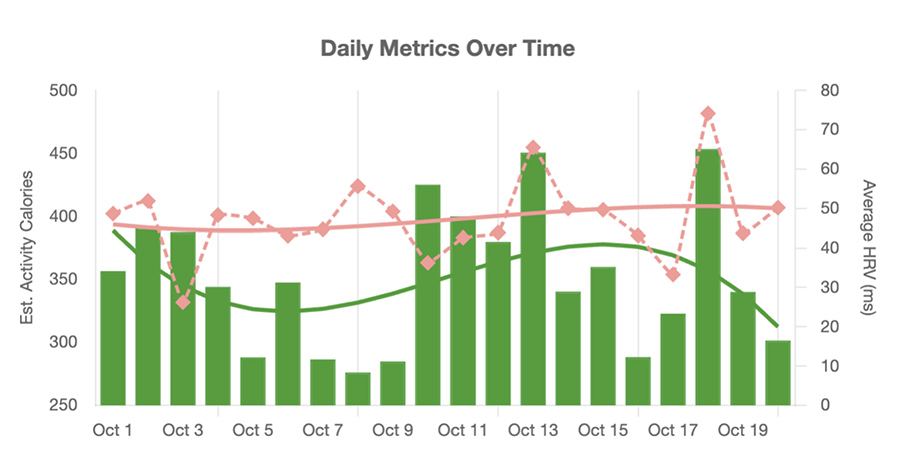
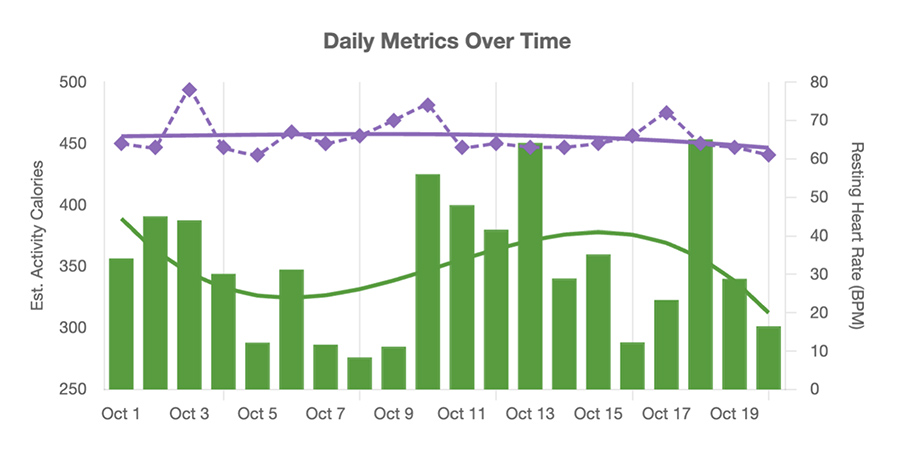
By plotting your data over time, your Physiotherapist can overlay activity metrics (such as active calories burned) against heart rate metrics (like HRV and resting HR) to reveal key patterns and pinpoint your individual activity thresholds. The graphs below illustrate roughly three weeks of data: while daily activity levels fluctuated, this individual showed a steady decrease in resting heart rate and higher HRV scores despite an increase in activity, which may indicate improved physiological tolerance.
Limitations of Biometric Data Monitoring
It is important to remember that data is a tool, not a complete picture. Wearable devices cannot capture the effect of cognition, anxiety/depression or other sources of environmental stress on symptoms or recovery. Data gives us a picture but we need to analyze it with context from daily symptom and activity tracking to more accurately determine next steps.
Remember: Data is a “canary in the coal mine.” It can tell us to slow down to avoid a crash and can guide your clinician to determine when things are stable enough to slowly increase activity.
Cornerstone Physio Connect
In 2025, Cornerstone developed a proprietary platform and associated app to help ease the data sharing process with our patients. The app is available in the Apple Store and Google Play:
Once this app is downloaded and your Physiotherapist has created your account, you can integrate your Apple, FitBit or Oura device. Your data is completely secure and will only be visible to your clinician.
In addition, you can use Cornerstone Physio Connect to track daily symptoms over time using a simple 0-5 scale with additional notes and view/ track exercises prescribed by your Physiotherapist. The patient app also allows you to view a prescribed exercise program and look at trends in symptoms or biometric data over time.
Recommended Device Brands
Below I will provide a brief overview of the 3 device brands that are currently compatible with Cornerstone Physio Connect. Please note that if you have another device brand, such as Garmin or WHOOP, that you can still use the device but your data will not sync with our platform. Your Physiotherapist can provide options to workshop the best way to access your data or teach you where to find key trends and insights in the associated device apps. If you have a different device but you use an iPhone and the device shares data with your apple health account, Cornerstone will be able to access that data through our Apple Health integration.
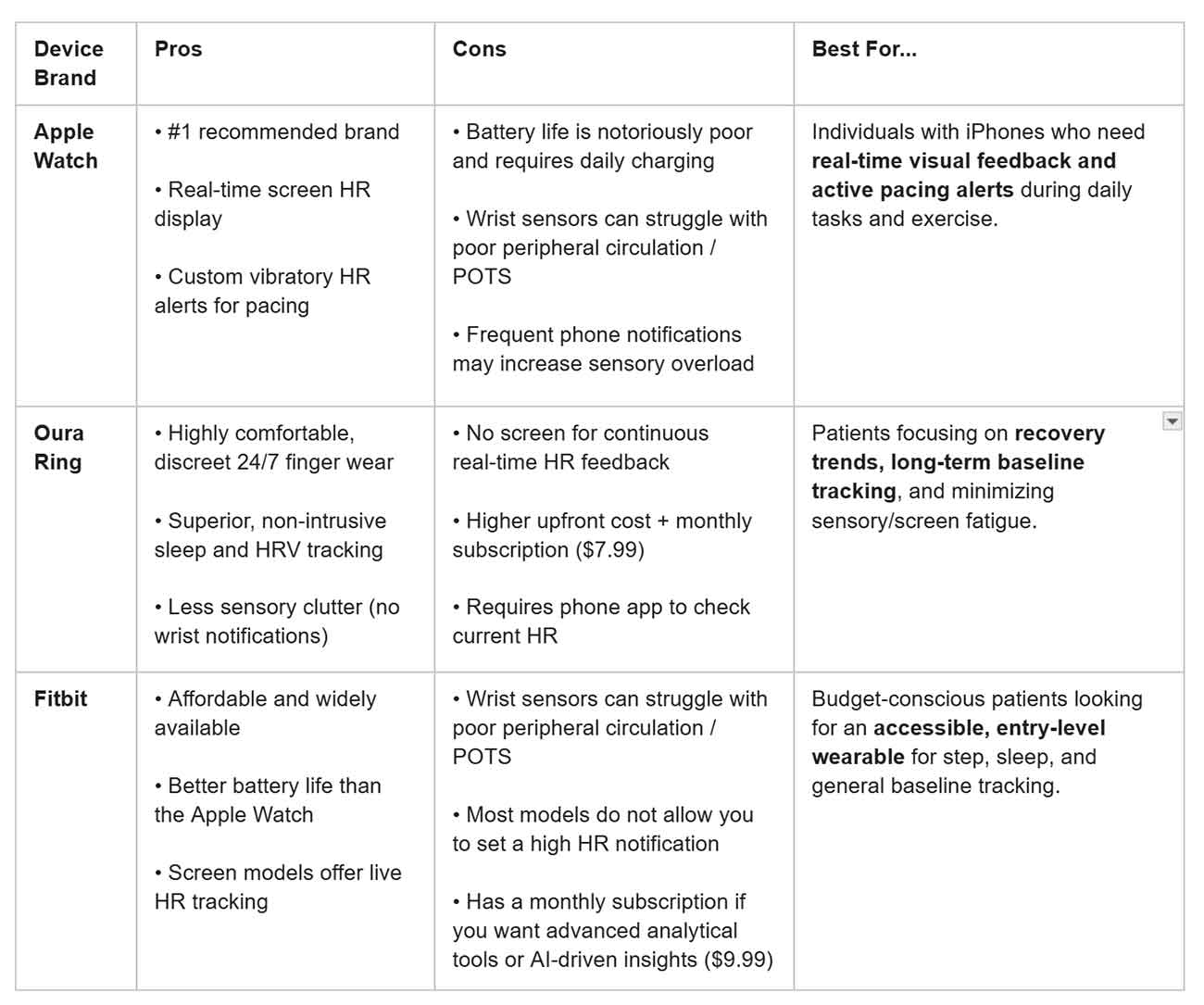
- Apple: Apple Watches are currently our #1 recommended brand of wearable device. They are simple to use and seamlessly pair with iPhones. All Apple Watch series will measure the metrics listed above, with newer models offering additional features such as a daily Readiness score (0-10), daytime & overnight Vitals App and cycle tracking for Perimenopause/Menopause.
- Oura Ring: The Oura Ring is a discrete finger-worn device that tracks comprehensive health metrics, including resting heart rate, activity calories, HRV, sleep stages, and daytime stress. Its non-intrusive design makes it an excellent option for 24/7 continuous wear and sleep tracking. While Oura offers daily recovery scores and sleep data, it does not provide continuous, real-time heart rate monitoring during workouts or exercise without manually taking a reading or viewing your phone screen. If real-time visual feedback during conditioning is primary for you, a wrist device with a screen may be preferred.
- FitBit: Fitbit devices are a popular and accessible option for tracking daily steps, resting heart rate, sleep stages, and HRV trends. Fitbit tracks RHR and HRV accurately enough for general health trends, but its algorithm calculates resting heart rate using a mix of sleep and quiet awake time, which can cause its baseline RHR to read slightly higher. Additionally, they work very well at rest or light walking, but its heart rate accuracy tends to degrade during higher-intensity movement or rapid spikes in heart rate compared to Apple. Sleep tracking has historically been one of Fitbit’s strongest suits. Like Apple, all models of FitBits will measure the basic metrics listed above.
Wrist Devices vs. Chest Straps
We are often asked about the benefits of a wrist wearable versus a chest strap heart rate monitor. While chest straps generally offer higher sensor accuracy, they lack an integrated screen for immediate heart rate feedback. If the chest strap links to a smartphone app, you can view real-time heart rate monitoring there, but this requires keeping your phone visible during exercise sessions.
Key Factors to Consider Before Choosing a Device
Sensory and Cognitive Overload
- Many of our patients with post-infection conditions experience significant sensory overload and brain fog. When choosing a device, consider if you need a screen for immediate visual feedback or if frequent notifications on your wrist will add extra stress and anxiety.
Data Accuracy Considerations
- Wrist-worn devices (like Apple Watches) are fantastic, but they can sometimes struggle with accuracy during rapid movement or if you experience poor peripheral circulation—a common issue for those managing POTS.
Real-Time Pacing vs. Retrospective Planning
- If your primary goal is to help you catch your heart rate before it spikes (for example, keeping your heart rate under 120 bpm while doing dishes), you would benefit from a device with a screen and customizable vibratory heart rate alerts.
- If your goal is to evaluate whether a new strategy is improving your baseline stability over several weeks or months, a screen-free tracker (like an Oura Ring) is often less intrusive and provides comprehensive daily data.
Visible App
The Visible App was designed specifically for individuals living with Long COVID, ME/CFS, POTS, and other energy-limiting conditions. While not compatible with Cornerstone Physio Connect, many of our patients use this health platform. Visible offers two ways to track:
- Free App (Morning Camera Reading): You use your smartphone camera first thing in the morning to capture resting heart rate (RHR) and Heart Rate Variability (HRV) readings, paired with an evening symptom check-in to calculate a daily stability score and personalized pacing insights.
- Visible Membership & Visible Band: Visible now offers a dedicated screenless wearable band (manufactured in partnership with Polar). The band streams continuous real-time heart rate data to your phone to give live pacing alerts, track “PacePoints,” and provide overnight HRV monitoring—all designed specifically around chronic illness management rather than fitness goals.
Questions?
If you have gotten this far and are still unsure of which device to select, I recommend waiting until you meet with your Physiotherapist for the first time. After your initial assessment, they will have a greater insight into your specific case and goals and can help guide you in this decision making process.
If you have questions about using wearable technology and biometric data monitoring in Post-Infection Physiotherapy in general, you can contact me directly at [email protected].
While this can all feel overwhelming at first, our team is here to help you navigate these tools and make sense of your data!


Questions? We're happy to help!
Choosing the right service provider can be a big decision. We’re dedicated to answering any questions you have to help you make the best choice. Contact us today and ask us anything!
Call us at (416) 238-6749Request More Information
