

- Assessment Appointment
*This fee is covered by most insurance plans as physiotherapy. Contact us for more details. *Please note that up to 10 min of the appointment is required for therapist documentation and treatment planning.
- 60 min.
- $145









Dysautonomia is an umbrella term for various disorders involving a primary or secondary failure of the Autonomic Nervous System (ANS). The ANS is responsible for regulating involuntary physiological functions, including heart rate, blood pressure, gastrointestinal motility, pupillary response, renal function, and temperature regulation.
With over 70 million cases worldwide, dysautonomia is a high-prevalence condition affecting all ages, genders, and ethnicities.
Despite its high incidence, diagnosis often takes years after symptom onset due to limited clinical awareness. While no definitive cure currently exists, organizations like Dysautonomia International are actively funding research to improve symptomatic management and identify curative interventions.
While there are many diagnoses under the umbrella of Dysautonomia, the most common form we see in our post-infection rehabilitation program is POTS (Postural Orthostatic Tachycardia Syndrome).
POTS is a common autonomic disorder defined by excessive tachycardia (racing heart rate) and intolerance to upright positioning. It is a heterogeneous syndrome, meaning it is a cluster of symptoms arising from various underlying etiologies rather than a single disease entity.
Clinical diagnosis requires a sustained heart rate increase of ≥30 bpm (or ≥40 bpm in pediatric/adolescent patients) within 10 minutes of standing, or a standing heart rate exceeding 120 bpm, in the absence of orthostatic hypotension.
POTS often involves hypovolemia (low blood volume) and elevated plasma norepinephrine, indicating overactivity in the sympathetic nervous system. It is categorized into several overlapping phenotypes:
Primary vs. Secondary: Primary (idiopathic) has no known cause; secondary occurs comorbidly with conditions like Ehlers-Danlos Syndrome (EDS), autoimmune disorders (Sjogren’s, Lupus), or post-viral sequelae (including COVID-19).
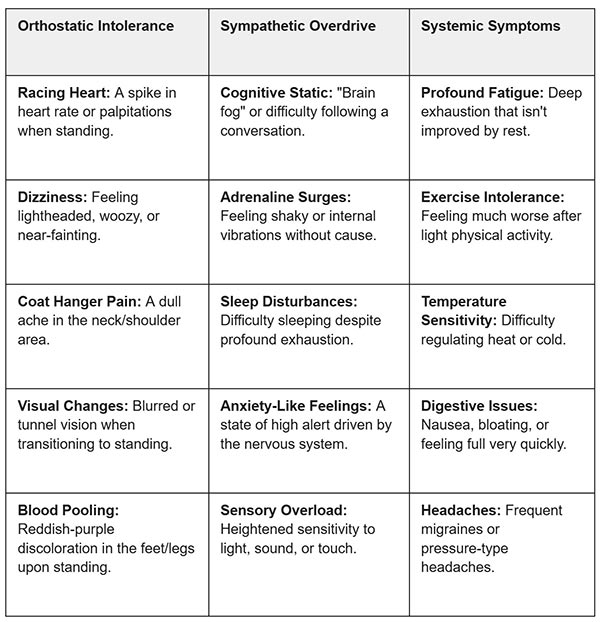
The symptoms of Dysautonomia can be unpredictable and often change based on the weather, hydration levels, or how long you have been upright. This chart outlines some of the common symptoms of dysautonomia but is in no way an exhaustive list:
We prioritize your comfort during the assessment, as we know that standing still can be a trigger for your symptoms.

We use an individualized approach to stabilize your symptoms and help your body better tolerate gravity. Some examples of some approaches that may be implemented include:
Managing Dysautonomia is not a one size fits all approach. Individuals with suspected or confirmed dysautonomia can benefit from the expertise of:

Dr. Todd Davenport
Physical Therapist, Professor and Researcher
Read their bio here
Biometric data monitoring can be used to help provide insight into an individual’s unique dysautonomia presentations. Using wearable technology, we can provide estimates of the amount of time upright, safe heart rate zones for activity and track other metrics like sleep and rest to help improve function and quality of life. Through monitoring of activity metrics like steps and active calories burned, we can hope to glean an optimal amount of movement that keeps your symptoms at bay.
The active stand test previously described can be used as a screening tool. It’s important to recognize that the presence of POTS can be missed on this test and factors like time of day, hydration, menstrual cycle timing, medications, caffeine and tobacco can influence the results. If the Active Stand Test results meet the HR and BP criteria for POTS and the other POTS criteria are met, then we can refer you back to your primary care physician with this information for diagnosis. Ideally, a tilt test confirms the diagnosis but can be difficult to obtain and very triggering for symptoms of orthostatic intolerance.
While not mandatory, having a wearable device (like a Garmin or Apple Watch) allows us to be much more precise with our recommendations and helps you feel safer with daily activities and exercise (when appropriate).
Reach out to our team for more information or book an initial assessment with one of our Registered Physiotherapists to get started!
Postural Orthostatic Tachycardia Syndrome (POTS)
How do I Know if I Have POTS?
Travel with POTS: Tips and Considerations
Cornerstone Physiotherapy is providing an invaluable resource to patients suffering from mild to severe autonomic dysfunction, particularly postural orthostatic tachycardia syndrome, a largely misunderstood and under-diagnosed condition. The team has a deep understanding of the physiology of the potentially debilitating symptoms and gradual treatment options on an individual basis. What a cornerstone of guidance and support for so many patients.
Before this program, I was fainting everyday at high school and was using a wheelchair to get around. I wanted to figure out what to do to stop me from fainting everyday and to gain my strength and independence back. After working with the team they started to help me gain things back that I had lost and now there was some hope to recovery. Since starting the program, I can go months without having symptoms and being able to walk on my own without having to use mobility aids all the time.

Choosing the right service can be a big decision. We’re dedicated to answering any questions you have to help you make an informed choice. Contact us today and ask us anything!
Call us at (416) 238-6749