

Yes. While breast cancer most commonly affects women, men can also develop the disease.

Request an Appointment

BY PHONE

Voted top physiotherapy clinic in the Greater Toronto Area 5 years in a row.






A breast cancer diagnosis changes everything in an instant. Beyond the initial shock, you are often faced with a cascade of complex treatments (surgery, chemotherapy, radiation, and hormone therapies) that impact your body in ways no one can truly prepare you for. These treatments can leave lasting physical and emotional imprints, including pain, fatigue, lymphedema, and changes in strength, mobility, and self-confidence.
At Cornerstone, we have assembled a premier interdisciplinary team and a world-class medical and surgical advisory board to deliver a comprehensive, evidence-based rehabilitation program. Our mission is to minimize the impact of treatment on your quality of life and help you achieve the best possible outcome from your surgery.
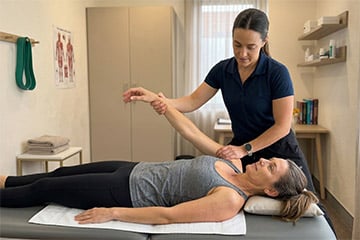
Our Physiotherapists are specialists in postoperative breast cancer rehabilitation. Having observed live surgeries and developed specialized protocols in consultation with leading surgeons, they are uniquely equipped to coach you through every challenge of your recovery.
Symptoms of Breast Cancer
- A new lump or thickening in the breast or armpit
- Changes in breast size or shape
- Skin changes (dimpling, redness, or puckering)
- Nipple changes or unusual discharge
- Persistent breast pain in one specific area
How Does Cornerstone’s Breast Cancer Postoperative Rehabilitation Program Work?
Ideally we begin the process with an hour-long session prior to your medical intervention where you will learn what to expect following discharge from the hospital, and what you should do prior to, and in the days following your surgery. This is an opportunity for our team to help share the wisdom of other patients who have preceded you. On the day of your surgery you, and your care team will be as informed and prepared as possible. In this visit we will identify other professionals you would benefit from having on your team, and develop a plan to work together toward your ideal recovery.
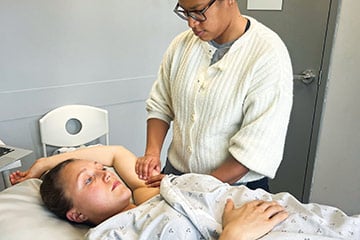
Your first few postoperative visits will also be an hour in length. These are critical visits where our Physiotherapist will help to treat any postoperative lymphedema and ensure that tissues are healing properly without compromising any future function of your arm, chest and shoulder.
As your recovery progresses visits will decrease to 30 min. in length. You can expect that we will coach you through the recovery process one step at a time balancing tissue healing timelines and the pursuit of your goals.
If you have discovered our program after your surgery, don’t worry, we can still help! Our rehab professionals will do a comprehensive assessment and put together a customized plan to meet your recovery goals.

Frequently Asked Questions
What are the risk factors for breast cancer?
There is no single cause, and many individuals who develop breast cancer have no known risk factors. However, recognized risk factors include:
- Increasing age
- Family history or genetic mutations (e.g., BRCA1/BRCA2)
- Hormonal factors
- Previous breast conditions
- Lifestyle factors, such as alcohol use or inactivity
How is breast cancer diagnosed?
- Mammogram
- Ultrasound or MRI
- Breast biopsy
- Additional imaging or specialized tests as required
What is breast density?
Breast density refers to the ratio of fibrous and glandular tissue compared to fatty tissue in the breast. This is identified via mammogram and noted in your report. Approximately 40–50% of women have dense breasts, categorized into four levels:
-
- Almost entirely fatty
- Scattered areas of density
- Heterogeneously dense
- Extremely dense
Why is knowing my breast density important?
On a mammogram, both dense tissue and tumors appear white. This can make it difficult to detect cancer, increasing the risk of it being missed. Knowing your density empowers you to advocate for your care. If you have dense breasts, consult your provider about more frequent screenings or supplemental imaging (such as ultrasound or MRI) based on your specific risk factors. Additionally, dense breast tissue slightly increases the overall risk of developing cancer.
How do I perform a breast self-exam?
- You should perform a self-check once a month to become familiar with the normal look and feel of your breasts, making it easier to notice changes.
- When: The ideal time is 5–7 days after your period ends, when breasts are least tender.
- If you do not menstruate: Choose the same day each month.
Step 1: Visual Inspection Stand before a mirror with your arms at your sides, then raised overhead, and finally with hands on your hips. While slight asymmetry is normal, look for:
- Changes in size, shape, or symmetry
- Skin changes (dimpling, puckering, redness, or thickening)
- Nipple changes (inversion, discharge, or scaling)
Step 2: Physical Check Using the pads of your fingers, apply light to medium pressure in a circular pattern. Cover the entire breast area—from the collarbone to the base of the breast, and from the breastbone to the armpit. Feel for:
- Lumps or thickened areas
- Hard knots
- New tender or painful spots
Our Clinical Advisory Team
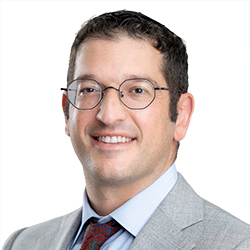
Dr. Ron Somogyi
Cosmetic and Reconstructive Surgeon, Assistant Professor
Read their bio here
Fee Schedule
What our breast cancer rehabilitation patients say...
Their program truly works; the staff are professionals and they are attentive and genuinely care to help and guide you on the roadmap to rehabilitation. The cancer treatments left me to deal with the aftermath of the side effects. Bo Lian, my physiotherapist, has truly done an outstanding job helping me move past the fatigue of chemo, radiation and the mobility restrictions following my lumpectomy. And, I was able to have a smooth transition of going back to work too because of her help.
What our breast cancer rehabilitation patients say...
My wife was getting a world-class physiotherapy service from the gentle and professional hands of Rosie Mahendran following a long and complicated recovery after the breast cancer surgery. Rosie revived her belly’s muscles, restored the right postures, and returned to active life. Thank you, Rosie, for helping people to get back to regular, happy and healthy life after so much pain and stress they experience after getting trauma!!!
What our breast cancer rehabilitation patients say...
After receiving my breast cancer diagnosis, I did not know that physical therapy was available. I began seeing Aparnaa midway through my radiation therapy regimen. Attending physical therapy has allowed me to help manage lymphedema, regain muscle strength after chemotherapy and given me sense of control over my health during a very stressful time. I’m very grateful to have discovered physical therapy as part of my cancer treatment and would strongly recommend Aparnaa and Cornerstone to others in similar situations.
What our breast cancer rehabilitation patients say...
I had trouble with mobility on my left arm after chemos and radiations. My arm was stiff and not abled to lift up higher than chest level because of lymphedema. I was lucky to have Aparnaa helped me with after effects of oncology treatments. With messages, exercises and various treatments I have recovered and able to lift my arm up high. Aparnaa is very patient and knowledgeable. I’d encourage anyone who have trouble with lymphedema to seek her out.
Resources
Our Partners and Additional Resources
Preventing Lymphedema After Breast Reconstruction: Why Early Physiotherapy Matters
Breast Cancer Rehabilitation: What to Expect
We’re Not Your Cancer Rehabilitation Clinic


Meet Our Rehabilitation Pros




Questions? We're happy to help!
Understanding how we can help with you with your condition can be confusing. We’re dedicated to answering any questions you have to help you make the best choice. Contact us today and ask us anything!
Call us at (416) 238-6749Request an Appointment