This program is delivered virtually and is available to all residents of Ontario, British Columbia or Alberta.
What is Fibromyalgia?
Fibromyalgia is a condition characterized by widespread pain and fatigue. It is often described as a “central sensitization” syndrome—meaning your brain and spinal cord process pain signals differently, turning up the “volume” on sensory input until it becomes painful.
Why Am I in Constant Pain?
It’s not just “all in your head”; it’s in your nervous system. Fibromyalgia involves:
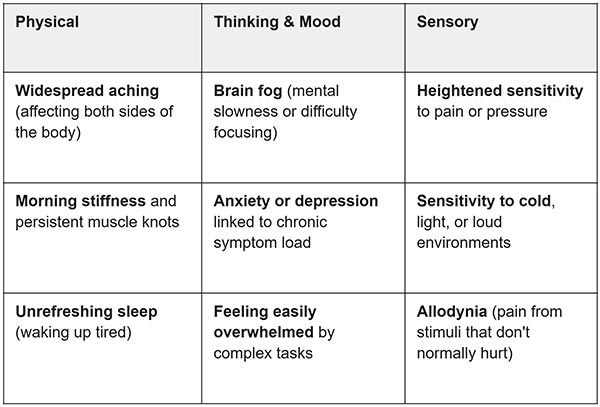
- Central Sensitization: Your nervous system stays in a high-alert state, making even light touch feel uncomfortable (allodynia).
- Sleep Fragmentation: You may rarely reach the deep sleep stages where the body repairs itself, leading to chronic fatigue.
- Neurochemical Imbalance: Changes in how your brain handles “feel-good” chemicals like serotonin can affect both pain and mood.
Common Signs and Symptoms of Fibromyalgia
How our Fibromyalgia Assessment Works
- Symptom Mapping: We identify your “tender points” and overall pain distribution to understand your specific presentation. We use the Widespread Pain Index and Symptom Severity Scores.
- Nervous System Analysis: We look at how sensitized your nervous system is and what factors could be “turning up the volume” on your pain and other symptoms.
- Movement Tolerance: We analyze your current activity trends to find your “sweet spot” for movement.
Our Approach to Fibromyalgia Treatment
At Cornerstone, we move away from traditional exercise when addressing Fibromyalgia:
- Pain Neuroscience Education (PNE): We teach you how your “alarm system” works. Understanding why you hurt helps break the fear-avoidance cycle that keeps pain levels high.
- Nervous System Regulation: We can look at sleep and other factors that influence the sensitivity of your nervous system. Incorporating restorative rest and nervous system regulation strategies can be effective ways to naturally lower your daily pain levels.
- Low-Impact Aerobic Exercise: Instead of long sessions, we use short bursts of gentle movement (like Tai Chi or hydrotherapy) to get the benefits of movement without triggering a “protective” flare.
Using Technology to Guide Your Management
In Fibromyalgia, your nervous system is often “over-reporting” pain and stress. We use biometric data monitoring to give us an objective look at what your body is actually feeling.
- Heart Rate Variability (HRV): We use HRV to monitor your “internal battery.” When your HRV is low, it’s a sign that your nervous system is stuck in a stress response. On these days, we shift from “movement” to “recovery” to prevent a pain flare.
- Sleep Quality Tracking: Since quality sleep is integral for pain management, we use data from your wearable (Apple Watch, Oura, Garmin) to track deep sleep cycles. This helps us see which strategies are actually helping your body repair overnight.
A Team Approach
- Physiotherapy (PT): In Fibromyalgia, the brain’s volume for pain is turned up too high. Our physiotherapists use Pain Neuroscience Education (PNE) to help you understand how your nervous system processes threats, which is a key step in lowering your overall pain baseline. Instead of “no pain, no gain” exercise, we recommend gentle intervals of activity that don’t overwhelm your body and can be progressed at a pace that honours your symptoms and overall goals.
- Occupational Therapy (OT): Our OTs specialize in “sensory pacing.” They help you modify your home and work environments to reduce sensory overload (like lighting or noise) and teach you cognitive strategies to manage brain fog.
- Registered Dietetics: Dietitians at Cornerstone focus on mitochondrial health. By identifying pro-inflammatory foods and optimizing your intake of magnesium and other key nutrients, they help provide your muscles with the fuel they need to reduce pain and fatigue.
Our Clinical Advisory Team

Dr. Todd Davenport
Physical Therapist, Professor and Researcher
Read their bio here
Frequently Asked Questions
Why does my pain move around to different parts of my body?
In Fibromyalgia, the issue isn’t damage to a specific joint or muscle; it’s the way your central nervous system processes signals. Because the “volume” is turned up globally, you may feel pain in different areas depending on your stress levels, sleep quality, or even the weather.
Is this just "lifestyle management," or can I actually get better?
Our goal is functional recovery. By desensitizing the nervous system and improving sleep, we aim to expand your “safe zone” for activity. While it is a chronic condition, many patients find they can return to the activities they love by learning to manage their nervous system’s “alarm.”
Is This Program Right For You?
- Do you live with widespread aching that feels like it’s “in the bones” or deep in the muscles?
- Is your sleep unrefreshing, leaving you feeling exhausted no matter how long you rest?
- Does your skin sometimes feel sensitive or painful to even a light touch (allodynia)?
- Do you feel like your brain is “buffering” or that it takes extra effort to focus on tasks?
- Have you tried to “exercise your way out of it” only to find that it triggers a massive pain flare?
If you answered “yes,” our team can help you “turn down the volume” on your pain signals and stabilize your energy.
Fibromyalgia Resources
Fibromyalgia | Guide to Symptoms, Diagnosis, Treatment