
Request an Appointment

BY PHONE


by Celia Chen MScPT
Registered Physiotherapist
Lymphedema can cause persistent swelling, heaviness, discomfort, and changes in the skin that affect a person’s mobility and quality of life. Whether it develops after cancer treatment, surgery, radiation or because of an underlying lymphatic condition, managing lymphedema involves more than simply moving fluid out of swollen tissues. The cornerstone of conservative lymphedema management is Complete Decongestive Therapy (CDT). It is the current gold standard for lymphedema management.
What is CDT?
Lymph is a fluid containing water, proteins, immune cells and other substances that normally travel through lymphatic vessels and eventually return to the bloodstream. Lymphedema occurs when the lymphatic system cannot adequately transport the fluid and proteins away from the tissues.
When lymphatic transport is impaired, fluid accumulates in the surrounding tissues. Overtime, this creates chronic swelling which can contribute to inflammation, tissue thickening, fibrosis, reduced mobility, and an increased risk of skin breakdown and infection.
The goals of CDT and lymphedema management are to:
- Reduce excess fluid and limb volume
- Prevent fluid from reaccumulating
- Improve the movement of lymph through the remaining functioning lymphatic pathways
- Activate the body’s natural muscle and joint pumps
- Maintain healthy skin and nails, and minimize the risk of infection
- Improve mobility, function, and quality of life
- Teach the individual how to manage the condition independently over the long term
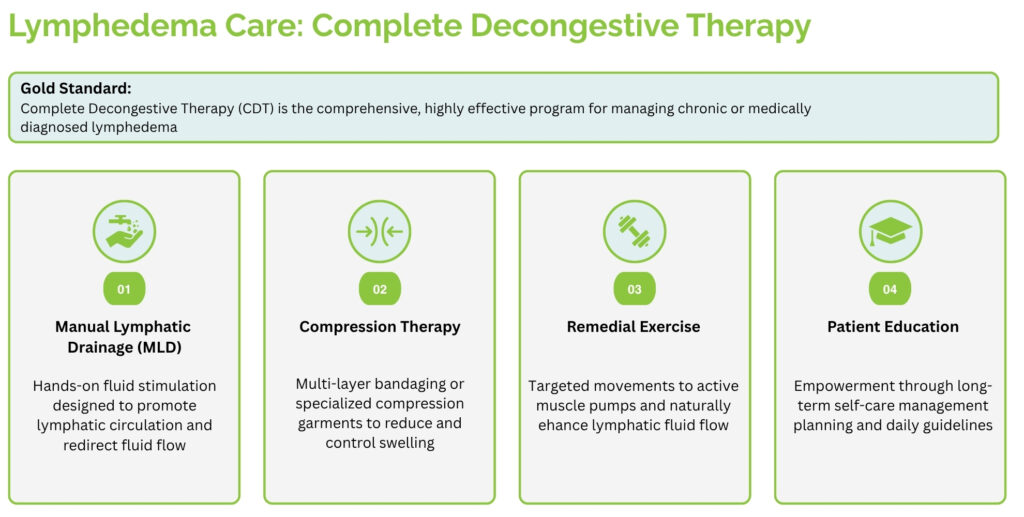
CDT is a multi-component treatment plan, rather than a single technique. It involves examination, compression, manual techniques such as MLD (manual lymphatic drainage), exercise, skin and nail care, education, and self-management.
The 2 phases of CDT
CDT involves two phases: a reduction phase, followed by a maintenance phase. Both are important because reducing swelling is only one part of the treatment; keeping it from returning is the long-term goal.
Phase 1: Reduction
Phase 1 focuses on reducing swelling as much as possible until the affected limb or body region reaches a stable, reduced volume.
Treatment is usually more intensive during this phase and may involve frequent appointments with a trained therapist. Multi-layer short stretch compression bandaging is used along with manual lymphatic drainage, exercise, and skin care. The therapist monitors changes in limb volume, tissue texture, symptoms, and the patient’s response to treatment.
How long this takes depends on the severity and duration of lymphedema, tissue changes, the area affected, and the individual’s response. For someone with early-stage lymphedema, meaningful reduction may occur over 2-4 weeks. More advanced lymphedema, particularly when there is significant tissue fibrosis or longstanding swelling may require several months.
Phase 2: Maintenance
Once swelling has been reduced and the limb volume has stabilized, the focus changes from reducing swelling to keeping it reduced. The patient transitions toward independent self-management, which involves:
- Wearing a properly fitted compression garment
- Using self MLD when appropriate
- Regular exercise
- Continuing skin and nail care
- Monitoring for changes in swelling, skin condition, or symptoms
Physiotherapy follow-ups may be needed to reassess limb volume, check garment fit, review techniques, and adjust the management plan.
The 4 main components of CDT
1) Manual Lymphatic Drainage (MLD)
This is a gentle hands-on technique that uses light rhythmic directed stretching of the skin and superficial tissues. Unlike traditional massage, it does not rely on deep pressure or forceful kneading.
The purpose is to encourage lymph movement through functioning lymphatic pathways and redirect fluid toward alternative drainage territories when normal pathways are compromised.
MLD can help to reduce swelling, improve tissue softness and mobility, and address areas of tightness or discomfort. It can be particularly useful when incorporated into a broader treatment plan that includes compression. MLD does not correct the underlying lymphatic impairment, and its effects may be temporary if the fluid it not adequately controlled afterward. This is why it should not be viewed as a stand-alone treatment for most cases of lymphedema.
2) Compression Therapy
This is often considered the workhorse of CDT because it helps control fluid accumulation and maintain the reduction achieved during treatment.
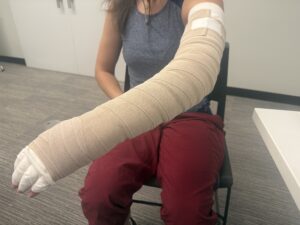
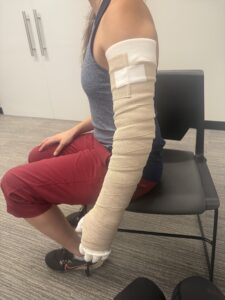
During phase 1, multilayer short stretch bandages will commonly be applied. These bandages have relatively low elasticity, meaning they resist expansion when the muscles underneath contract. This creates an important effect:
- At rest: the bandages provide a relatively low resting pressure when properly applied making them well tolerated and safe
- During movement: muscle expansion pushes against the bandages, creating a higher working pressure that supports the muscle pump and promotes fluid movement
The layered bandaging also provides a supportive casing around the limb, helping limit the return of swelling between treatment sessions. Compression helps limit further fluid accumulation in the tissues, supports venous return, and enhances lymphatic fluid movement. These bandages can also be worn for up to 48-72 hours.
During phase 2, patients often transition to fitted compression garments. Depending on the affected area, limb shape, and tissue characteristics, these may include flat-knit garments, circular knit garments, sleeves, stockings, gloves, or other specialized options such as adjustable compression wraps, nighttime compression garments and pneumatic compression pumps. The garment must be appropriately selected and fitted to provide effective compression while remaining tolerable and safe.
3) Exercise and Movement
This is another essential part of lymphedema management because muscle contractions and joint movements help propel fluid through the lymphatic and venous systems. When exercise is performed while wearing compression bandages or garments, muscle expansion against the external resistance can enhance the working pressure to help support fluid movement.
Exercise also offers benefits beyond swelling reduction. It can improve strength, cardiovascular fitness, joint mobility, endurance and confidence with daily activities. The 3 main types of exercise are: flexibility, strength, and aerobic.
- Flexibility or stretching exercises: this helps to minimize skin scarring and joint contractures. Lymphedema has a tendency to restrict motion of muscles and joints. Lymphedema from cancer treatment is associated with tight muscles and connective tissues due to fibrosis from surgery or radiation and optimal lymphatic function requires full mobility.
- Resistance or weight-lifting exercise: may involve lifting body weight or lifting objects such as dumbbells. Can be performed without moving a joint (isometric) or by moving the joint through range of motion (isotonic). Many studies on resistance exercise in cancer-related lymphedema show no harmful effect on lymphedema and beneficial effects for overall health.
- Aerobic or cardio exercise: this involves increasing the heart rate to 60-70% of an individual’s maximum heart rate. Examples include walking, jogging, cycling, and swimming.
There are other types of exercise that have benefits such as pilates, yoga, Taichi, Qigong, aquatic exercise, trampoline rebounding, breathing exercises, and relaxation exercise.
Exercise is safe for people with lymphedema when introduced gradually and adapted to the individual’s condition and abilities. A physiotherapist can prescribe an individualized exercise program based on the affected limb, functional limitations, medical history, and exercise tolerance. Exercise should progress gradually, with attention to new or increasing swelling, discomfort, or other symptoms.
4) Skin and Nail Care
Skin care is a critical part of lymphedema management. Chronic swelling stretches and alters the skin and underlying tissues. Over time, the skin may become dry, thickened, less flexible, and more vulnerable to small cracks and wounds.
Lymphedema impairs local fluid clearance and can affect the skin’s protective barrier. These changes increase the risk of infection, particularly cellulitis. Cellulitis can cause redness, warmth, pain, and swelling, and may require urgent medical assessment and antibiotic treatment. Repeated infections can further impair lymphatic function.
Skin and nail care includes:
- Washing the affected area gently and drying it thoroughly, including between the toes and skin folds
- Applying an appropriate moisturizer regularly to prevent dryness and cracking
- Inspecting the skin for cuts, blisters, redness or other changes
- Caring for nails carefully to avoid cuts to the surrounding skin
- Seeking medical care if signs of infection develop
Skin care supports both immediate tissue health and long-term disease management.
How Physiotherapy Supports Long-Term Lymphedema Management
Physiotherapy plays a central role in bringing the components of CDT together. A physiotherapist trained in lymphedema management assesses swelling, tissue characteristics, skin integrity, range of motion, strength, symptoms, and function. The assessment helps determine which interventions are appropriate.
Treatment may include manual techniques, compression bandaging, garment selection and fitting, individualized exercise prescription, and education about skin and infection prevention. We can help patients develop the skills and confidence needed to manage their condition independently. This includes learning how to apply or manage compression, performing the exercises, monitoring changes, and recognize when re-assessment is needed.
Lymphedema management involves controlling swelling, supporting lymphatic and venous function, maintaining mobility, protecting the skin, and reducing the risk of complications. CDT brings these goals together through compression, exercise, skin care, manual techniques, and patient education. Its two-phase approach aims to first reduce swelling, and then to maintain those improvements through sustainable daily habits.
With appropriate physiotherapy guidance and a personalized long-term plan, many people with lymphedema can better manage their symptoms, maintain their independence, and improve their quality of life.


Questions? We're happy to help!
Choosing the right service provider can be a big decision. We’re dedicated to answering any questions you have to help you make the best choice. Contact us today and ask us anything!
Call us at (416) 238-6749Request More Information
